
Outdoor Kitchen Permits in Los Gatos and Los Altos: What You Can Build and Where
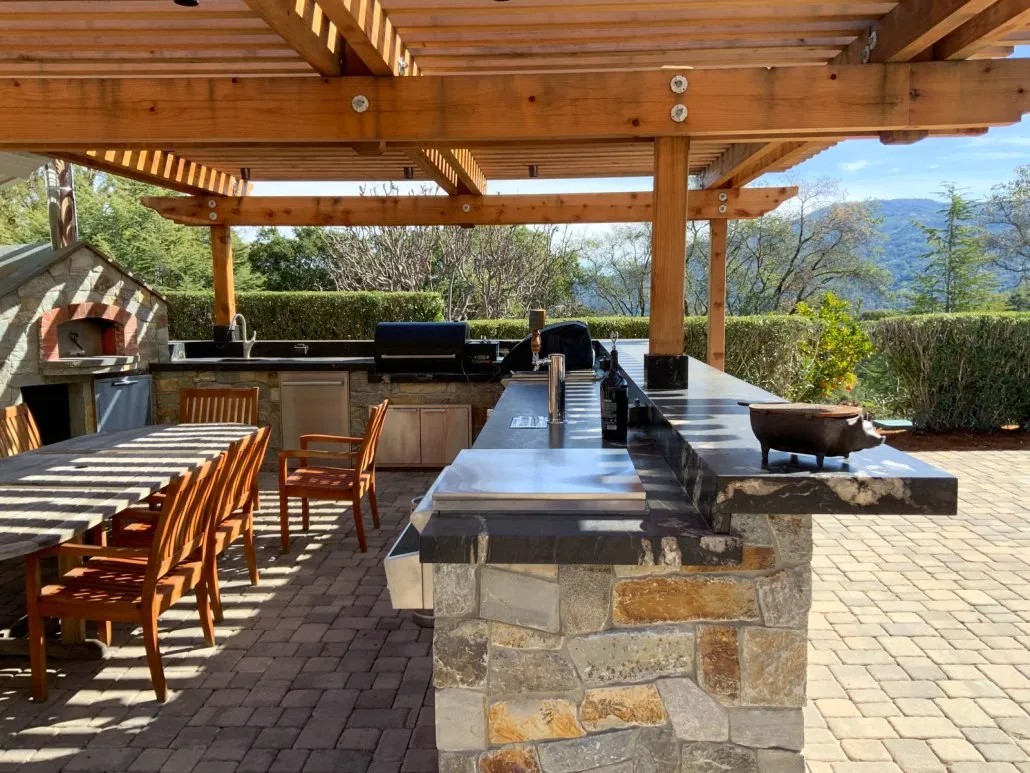
Most outdoor kitchens that stall in Los Gatos or Los Altos don’t stall over the grill. They stall over where the island sits. Put a barbecue counter four feet from the side fence in Los Altos and no amount of beautiful stonework gets it approved, because the city doesn’t allow barbecues in a side yard setback at all.
The two towns are a short drive apart and write their rules differently. Here is what each one actually says, what triggers a permit, and the fire and air-quality rules that shape the design before anyone pours a footing.
The short answer: plan for permits
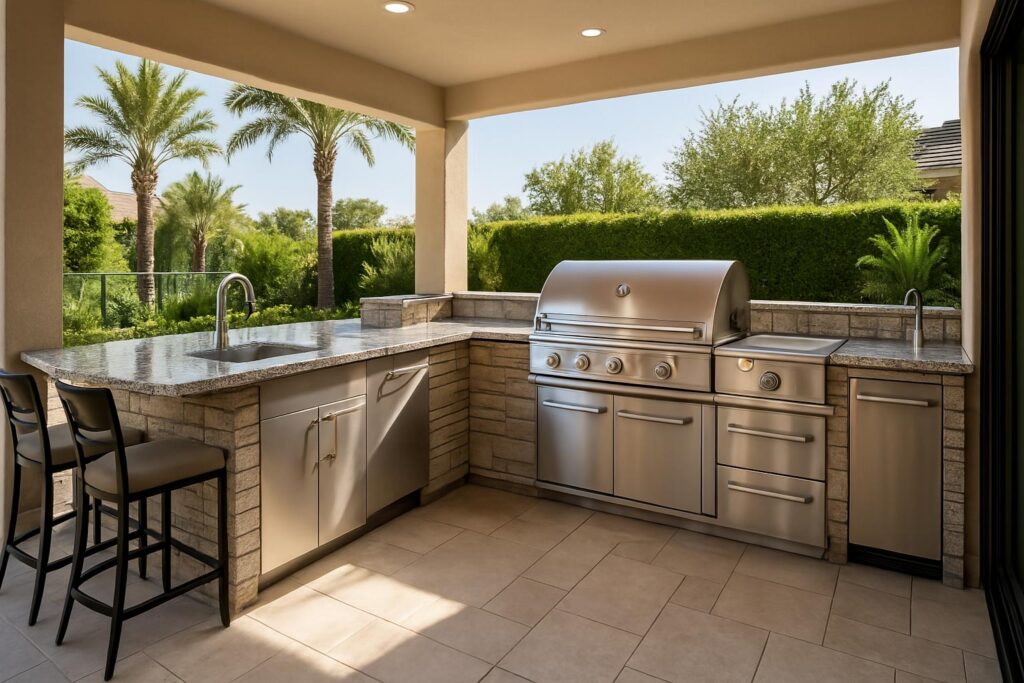
If your outdoor kitchen has a gas line, a new electrical circuit or a sink with a drain, plan on building permits. That covers nearly every built-in kitchen worth having: a gas grill, refrigeration, lighting and a prep sink each bring a trade with its own inspection.
Eric Leith Hagberg, a Bay Area landscape designer writing in the Los Altos Town Crier, put it plainly: for many landscape projects a permit isn’t needed, but for an outdoor kitchen “the answer is always yes.”
The permit is the easy part. Location is where projects go wrong, and the location rules are set by planning, not building.
Los Altos: barbecues belong in the rear yard
The City of Los Altos publishes a single handout for the R1 single-family zone, Accessory Structures and Swimming Pools (updated June 2023). It has a section written for exactly this project, titled “Outdoor Barbeques and Fireplaces,” which also covers sinks and similar structures.
Its rules are short:
- Barbecues, outdoor fireplaces and sinks may sit inside the building envelope or in the rear yard setback area.
- They are not allowed in a front or side yard setback.
- They must be at least five feet from any property line.
If the kitchen comes with a roof, the rules for a pergola or shade structure apply on top of that. In the rear yard setback area a covered structure can be up to 12 feet tall and 800 square feet, must stay at least 10 feet from the house, and must fit inside a daylight plane that starts six feet up at the side and rear property lines. Anything over six feet tall can cover no more than 35 percent of the rear yard setback area.
Two permit triggers in that handout catch people out. Any detached accessory structure, temporary or permanent, needs an Administrative Design Review Permit from Planning. And an open pergola or trellis over six feet tall needs a building permit, even though it has no walls.
Los Gatos: the accessory building standards
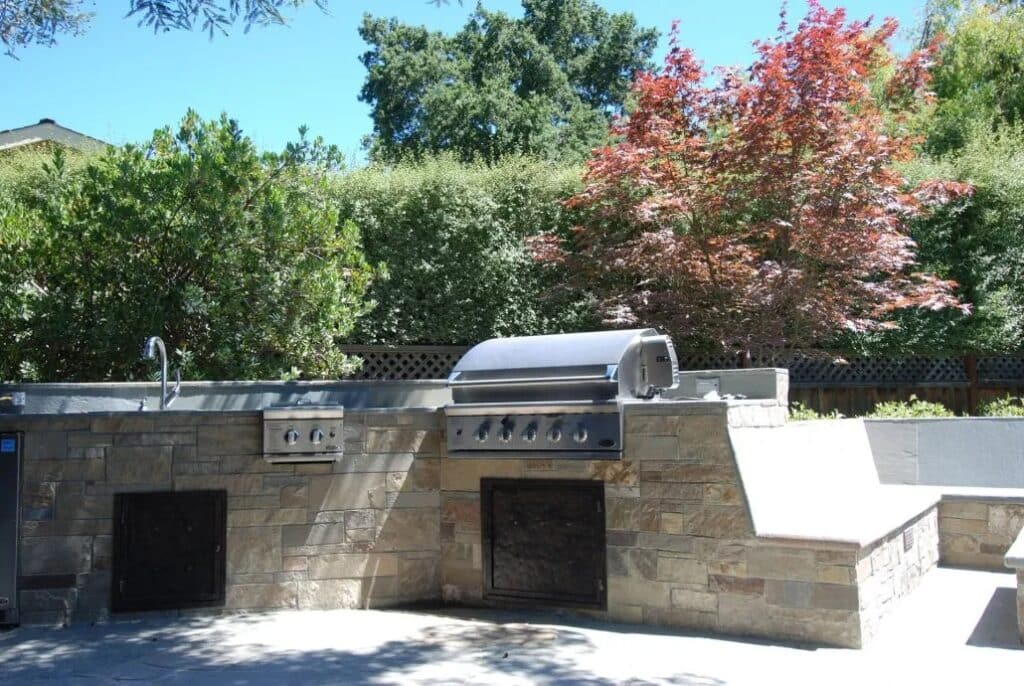
The Town of Los Gatos treats a covered outdoor kitchen as an accessory structure. Its Accessory Building Standards handout (last updated December 2021) lists “garden structures” and “free-standing patio covers” among the uses it covers, and sets these limits:
- Maximum height of 15 feet, and no more than one story.
- Not in a required front or side yard.
- At least five feet from any property line, and five feet from any other structure on the lot.
- Lot coverage of no more than 15 percent, calculated outside the required setbacks, and within the allowable floor area ratio.
- More than 450 square feet of accessory buildings combined needs a minor residential development permit. In the hillside HR zone the bar rises: over 600 square feet goes to the Development Review Committee, and over 1,000 square feet goes to the Planning Commission.
There is one useful exception. A single accessory structure under 120 square feet may sit in a required side or rear setback without zoning approval. A compact grill pavilion can sometimes use it. A full kitchen with a covered dining area usually can’t.
On a hillside lot, the Town’s Hillside Development Standards and Guidelines add a layer before any of this. They ask designers to identify the “least restrictive development area” first and fit the program into it. On a steep Los Gatos parcel that often decides where the kitchen goes long before the cabinet layout does. We covered how the hillside rules shape a whole property in our Los Gatos landscaping guide.
Fire zones change the materials, not just the paperwork
In June 2025 the Los Gatos Town Council adopted the State Fire Marshal’s updated fire hazard severity zone map for local responsibility areas. You can check a parcel on the Santa Clara County Fire Department’s LRA fire hazard map. Inside a mapped zone, Chapter 7A of the California Building Code governs how structures near the house are built. Section 710A covers accessory structures, and in practice building departments ask for noncombustible material, ignition-resistant material or heavy timber on patio covers and pergolas near the house.
Then there is Zone 0, California’s proposed ember-resistant zone for the first five feet around a home. The Board of Forestry approved the regulations in August 2026, but on 8 September the Board withdrew the package from state review to make technical edits. It is not in effect and there is no new effective date. The approved draft targets combustible materials within five feet of the house, including attached decks and stairs.
Our advice doesn’t wait for the paperwork. An outdoor kitchen built against the house in a fire zone should use masonry, stone or steel framing with noncombustible counters, and keep wood cabinetry and stored fuel out of that five-foot band. The fence rules follow the same logic, which we covered in fence and gate rules in Los Gatos and Los Altos.
The Spare the Air detail most plans miss
Plenty of outdoor kitchens include a fire feature: a pit at the end of the dining area, or an outdoor fireplace beside the counter. In the Bay Area that brings in the Air District’s Wood Burning Rule.
During a Spare the Air alert for fine particle pollution, burning wood, fire logs or pellets is illegal indoors and outdoors, and that explicitly includes outdoor fire pits. Cooking fires are treated differently. The rule states that fires for cooking are not prohibited during an alert, though the District asks people to consider a gas or propane barbecue on those days.
So a wood-fired pizza oven can stay in use on an alert night, while a wood-burning fire pit three feet away cannot. If evening fires through the winter matter to you, design the fire feature for gas from the start. The rule also bars wood-burning devices in new buildings. Our outdoor fireplace guide goes deeper on the fire side.
A practical sequence that avoids redesigns
This order puts the expensive decisions after the rules are known:
- Confirm the zoning district and setbacks for the lot. In Los Altos that tells you where the rear yard setback area starts. In Los Gatos it tells you whether the HR hillside rules apply.
- Check the fire hazard severity zone. It decides framing and countertop materials near the house.
- Place the kitchen, with at least five feet to every property line and, in Los Altos, a covered structure at least 10 feet from the house.
- Size the roof against the height, area and coverage limits before choosing a pergola style.
- Route the utilities. Gas, power and drain runs are where trenching cost lives, so the shortest legal path to the house wins.
- Choose the fire feature fuel with the Spare the Air rule in mind.
Only then is it time to pick the grill, the stone and the cabinetry. Those choices are where the personality of a kitchen comes from, and they are the ones nobody should have to redo because the island ended up in a side yard.
What it means for planning your project
The rules in both towns are reasonable once you know them, and most of them reward good design anyway: a kitchen five feet off the fence line is more comfortable to cook in, and a gas fire feature is easier to live with. The mistake to avoid is designing first and checking second.
If you are weighing what’s possible on your lot, see what goes into our custom outdoor kitchen design and installation work, or browse ideas in the advantages of custom outdoor kitchens and dining areas and chef-level outdoor kitchen designs. Seville Landscape Construction has designed and built Bay Area landscapes since 1978 with an in-house team, and outdoor kitchen projects start at $20,000.
Frequently asked questions
Do I need a permit for an outdoor kitchen in Los Gatos or Los Altos?
If it includes a gas line, new electrical work or plumbing, plan on building permits. In Los Altos, any detached accessory structure also needs an Administrative Design Review Permit from Planning, and an open pergola over six feet tall needs a building permit.
How close to the property line can an outdoor kitchen be?
In Los Altos, barbecues, outdoor fireplaces and sinks must be at least five feet from any property line and cannot sit in a front or side yard setback. In Los Gatos, accessory structures must be at least five feet from any property line and cannot sit in a required front or side yard.
Can I put a roof over my outdoor kitchen?
Yes, within limits. In Los Altos a covered structure in the rear yard setback area can be up to 12 feet tall and 800 square feet and must stay 10 feet from the house. In Los Gatos accessory structures can be up to 15 feet tall and one story.
Can I use a wood-fired pizza oven on a Spare the Air day?
The Air District’s Wood Burning Rule says fires for cooking are not prohibited during a Spare the Air alert, though it encourages gas or propane on those days. Wood-burning outdoor fire pits are not allowed during an alert.
Does California’s Zone 0 rule apply to outdoor kitchens?
Not yet. The Board of Forestry withdrew the Zone 0 package from state review in September 2026 for technical edits, so it is not in effect. The approved draft targets combustible materials within five feet of the house, so a kitchen built against the house in a fire zone is best designed in noncombustible materials now.
You’re Serious. We’re Serious.
Get Started With Luxury Landscaping Design Today
Here’s what serious looks like: our minimum starting price for a project is $20,000, and adjusts to encompass residential projects of any size. Tell us about your project, and we’ll give you a call. We’ll work from your blueprints or create a design from scratch in consultation with you. We look forward to talking to you about your vision for the perfect outdoor living space.